.avif)
Aachen parking zones
There are cities where parking is a secondary issue. Aachen is not one of them. If you're new here, whether for studies, a new job, or a project, you'll notice pretty quickly that parking is becoming part of your everyday life, especially if you commute from the surrounding area or travel regularly by car. And because Aachen uses a clear system of tariff zones, residents' parking areas and special rules, it is unfortunately not enough to rely on gut feeling. Overlooking a sign can be expensive, and even more annoying is the feeling that you always remain uncertain when parking. This article is therefore deliberately practical. You will receive the most important rules about Aachen parking zones in a form that you can keep in mind, including times, tariffs, day tickets, mobile phone parking and the points that experience shows that lead to parking tickets most frequently. We will also briefly look at parking in the vicinity of RWTH, because this is a separate world for many students, employees and guests. And in the end, we combine the whole thing with living, because parking and residential location in Aachen are more closely connected than you might think at the beginning.
Understanding Aachen parking zones: logic first, then details
When parking on the side of the road, the city generally differentiates between two tariff zones. That sounds like bureaucracy, but it's actually a relief because it allows you to assess more quickly which rules are likely to apply. The only important thing is that you understand: The tariff zone sets framework conditions, but the signs on site always have the last word. If an area is regulated differently, it's on the vending machine or on the signs.
Tariff zone 1: city center, alleenring and some named streets
Tariff zone 1 concerns the inner city area. This includes all roads within the Alleenring, who Alleenring itself as well as some expressly named roads: Zollamtstraße, Hackländerstraße, Friedlandstraße and the lower Burtscheider Strassen.
The rules in tariff zone 1 are clear, but they give you less leeway:
- Operating time: Monday to Saturday from 9 a.m. to 9 p.m.
- Tariff: 3 euros per hour
- Maximum parking time: 4 hours
In practice, this means that the city center is good for short tasks, appointments or quick visits. If you want to stay longer, it's worthwhile to consciously look at alternatives, such as parking garages or park and ride, because otherwise the four-hour limit on the side of the road becomes a time problem.
Tariff zone 2: Resident parking zones and other marked areas in the urban area
Tariff zone 2 includes all other roads in the urban area with residents' parking zones as well as other marked areas outside the residents' parking zones.
There are different times and a different rate here, but there is no maximum parking period:
- Operating time: Monday to Friday from 9 a.m. to 7 p.m., Saturday from 9 a.m. to 2 p.m.
- Tariff: 1 euro for the first 40 minutes, then 50 cents per 20 minutes
- Maximum parking time: none
So if you're in town for a longer period of time, tariff zone 2 can often be the more relaxed option. You still have to pay, of course, but you don't have to fight against a fixed maximum duration.
Day tickets: A real stress reliever in certain areas
Day tickets are offered in selected resident parking zones in tariff zone 2. This is not the case everywhere, but only in certain areas that the city specifically mentions. The prices depend on the zone:
- 5 euros in the East 2 parking zone
- 6 euros in parking zones E2, BU2, East 3 and on the Kleverstraße parking range in Burtscheid
- 8 euros in parking zones V, U and East 1
My tip: If you park in a residents' parking zone and know that you'll be staying longer, check at the vending machine to see if a day ticket is offered. If so, this is often the easiest solution because you don't have to constantly solve or think things through.
If you just want to remember one thing, it's this: It's more expensive in the city center, but the logic is simpler. It is smaller all around, but it can be cheaper or more flexible for longer parking times, depending on where you are standing.
Parking fees in Aachen: Times you really need to know
Many speeding tickets arise not because someone did not want to pay at all, but because someone misjudged the operating times. In Aachen, the times are fairly clearly regulated, but they differ depending on the zone.
In tariff zone 1, you must buy a parking ticket from Monday to Saturday between 9 a.m. and 9 p.m., either at the vending machine or via mobile phone. The rate is 3 euros per hour, the maximum parking time is 4 hours. In tariff zone 2, the operating obligation applies Monday to Friday between 9 a.m. and 7 p.m. and Saturday between 9 a.m. and 2 p.m. There you pay 1 euro for the first 40 minutes and then 50 cents for every 20 minutes started; there is no maximum parking time in this zone.
What is often overlooked: There are zones and individual parking spaces with different regulations. The city expressly points out that such deviations are shown on the vending machines. This is important because otherwise you will be at the wrong vending machine with the correct basic assumption.
Day tickets in certain resident parking zones
Day tickets are offered in selected resident parking zones in tariff zone 2. These day tickets are not available everywhere, but only in certain areas. Depending on the zone, these day tickets are 5 euros, 6 euros or 8 euros. This is particularly interesting for you as a visitor if you know that you want to stay longer and don't want to keep an eye on the clock all the time.
My tip: If you park in a residents' parking zone, consciously check at the vending machine to see if a day ticket is displayed. If so, it may be the most stress-free option.
Special regulations that are really relevant in Aachen
So that you can rely on reliable information, here are the special rules that the city explicitly states and which actually often play a role in everyday life:
- In residents' parking zones E, K, N, O, T, V and Z, the operating time is Monday to Saturday until 21:00.
- There is no charge for parking in Zone KU on Saturdays.
- Parking at the Vaals Grenze car park is also subject to a fee on Sundays and public holidays.
These are exactly the details that you hardly ever intuitively guess correctly as a newcomer, and that's exactly why it's worth reading them once.
Mobile phone parking in Aachen parking zones: Using EasyPark correctly
In Aachen, you can also pay short-term parking rates via mobile phone via EasyPark in all resident parking zones. The practical part is clear: You don't have to walk to the vending machine, you can control times better and you're ready to go faster.
Only one detail that many overlook is important: If you do not want to pay any additional service fees per parking transaction, you must select the “EasyPark Lokal Aachen” tariff in the app. It sounds like a small thing, but it makes a real difference in everyday life if you park frequently.
Avoid parking tickets: What is actually checked in Aachen
The city is intensively monitoring the operating obligation. If you park without a valid parking ticket, you will be charged a warning fee of at least 20 euros. If it is found that a car has been parked for more than three hours without a valid parking ticket, the warning fee can rise to 40 euros.
This is a good reality check because it shows: “Just briefly” is unfortunately not a strategy. If you're unsure whether you have to pay, the safest way is always to read the signs and, if in doubt, solve a parking ticket instead of hoping.
Electric mobility: Parking free of charge, but only with clear limits
This is also a point that quickly leads to misunderstandings: In Aachen, there is a special regulation for electric vehicles so that charging stations are not blocked. Electric vehicles may park free of charge for a maximum of two hours with a parking disc during operating hours at public parking spaces, but only with a German E license plate. Vehicles with foreign license plates require a vignette for this.
And another important addition: The conditions at public charging stations depend on the respective operator; the maximum permitted charging time is marked at the charging stations. In Aachen, there is also a distinction between fast charging and normal charging, with limited times, which are also shown locally. For you, this means in a very practical way: Don't rely on general assumptions, but read the signs directly at the charging station.
Aachen parking zones and resident parking: What does that mean for you as a visitor
In Aachen, there are 28 residential parking zones in the center, and more are being planned. Residents can apply for an ID for the zone in which they live. In addition, there are lump sum passes for certain groups of people, such as craftsmen, family carers and carers.
For you as a visitor, the decisive sentence is: If you park in a residents' parking zone, you usually have to buy a parking ticket, either online or at a vending machine. Resident parking therefore does not automatically mean “forbidden for everyone else”, but it means very clearly: As a visitor, you are a paid visitor, and that is exactly why the vending machine or app are your safe route.
The best parking routine: How to read signs without a mental cinema
Many parking mistakes don't happen because someone is inattentive, but because you're trying to process all the information at the same time. A simple order helps you without you having to make a science out of it:
- Main sign: What is generally allowed or required
- Additional signs: times, exceptions, restrictions
- Markings: Are there individual parking spaces with different markings
- Machine or app Note: How do you pay, are there day tickets
- Comparison with time and day of the week: Does this apply right now
If you do this consistently for two weeks, parking in Aachen suddenly feels much more normal, because you're not guessing anymore, you're checking.
RWTH Parking: Why it's a separate system
When you travel around RWTH, there is one important special feature: RWTH introduced parking space management back in 2011. This means that, in principle, every person who wants to park in parking areas at the university needs a parking permit.
This comes as a surprise to many newcomers, because people subconsciously expect university parking spaces to function like normal public parking spaces. But they don't. So if you travel to RWTH regularly, it's worthwhile to understand this system early on so that you don't get towed away at some point or lose unnecessary time.
Who can get a RWTH parking pass
In principle, people who are allowed to purchase a job ticket can also purchase a parking pass. In addition, RWTH names other groups, including students, student and research assistants, certain employees of other institutions in RWTH buildings, scholarship recipients, and university institutions for guests.
For students, one rule is particularly important and very specific: Students may only park in parking zone U. The parking permit for students is issued every semester and must be re-applied for each semester. The start of the subscription is variable, but the certificate is always valid until the end of the respective semester.
So if you're studying and think you could park somewhere in the RWTH area with your student ID, save yourself the thought. The system is zone-based, and zone U is crucial for students.
RWTH car parks and opening times, short and suitable for everyday use
RWTH lists specific car parks and parking areas with opening hours. This is particularly important for you: Not every parking garage is open around the clock, some have clear time windows on weekdays and are closed on weekends. However, there are also parking areas that are open all the time, although the following applies expressly to rented spaces: follow the signs.
This is relevant in everyday life, because otherwise you're standing in front of a barrier on Saturdays and wondering why nothing works. If you have to go to RWTH regularly, plan for a safe alternative that also works during your time.
RWTH prices so you can plan realistically
RWTH is quoting specific prices for 2026. A regular parking pass costs 12.50 euros per month. A parking pass in addition to the job ticket costs 6.50 euros per month. For guests, there is a guest parking pass for 19.50 euros per month, as well as conference tickets for 16 euros per day. Craftsman parking passes are offered both per day and as a month or year.
It is not important that you learn every number by heart, but that you understand: RWTH parking is not “I'll go somewhere”, but a controlled system with ID cards, zones and regular monitoring.
Monitoring at RWTH: You should take this seriously
RWTH monitors the entire parking space, particularly during working hours at least once a day at irregular times, and even outside general working hours if necessary. And very important: If you do not have a valid parking permit, your vehicle can be towed away by a contracted company at the request of RWTH. In addition, the parking permit should be visibly attached to the windshield so that it can be correctly entered.
This is not a threatening scenario, but simply the consequence of managed parking space. If you park in the RWTH area, check beforehand whether you are really eligible there.
Parking and living: Why they belong together in Aachen
Now the part that often only stands out after you move in: Your residential area decides whether parking annoys you every day or whether it remains a normal routine. If you regularly spin around for ten minutes in the evening because you can't find a parking space, that is not only a loss of time, but also stress that eats into your everyday life.
Especially if you're new to Aachen, it's worth looking not only at rent and rooms when looking for accommodation, but also at how parking in the area realistically works. Are there resident parking zones, which operating times apply, are there day tickets, what is the situation in the evening, how far is it to the nearest parking garage. These are not luxury issues, these are everyday issues.
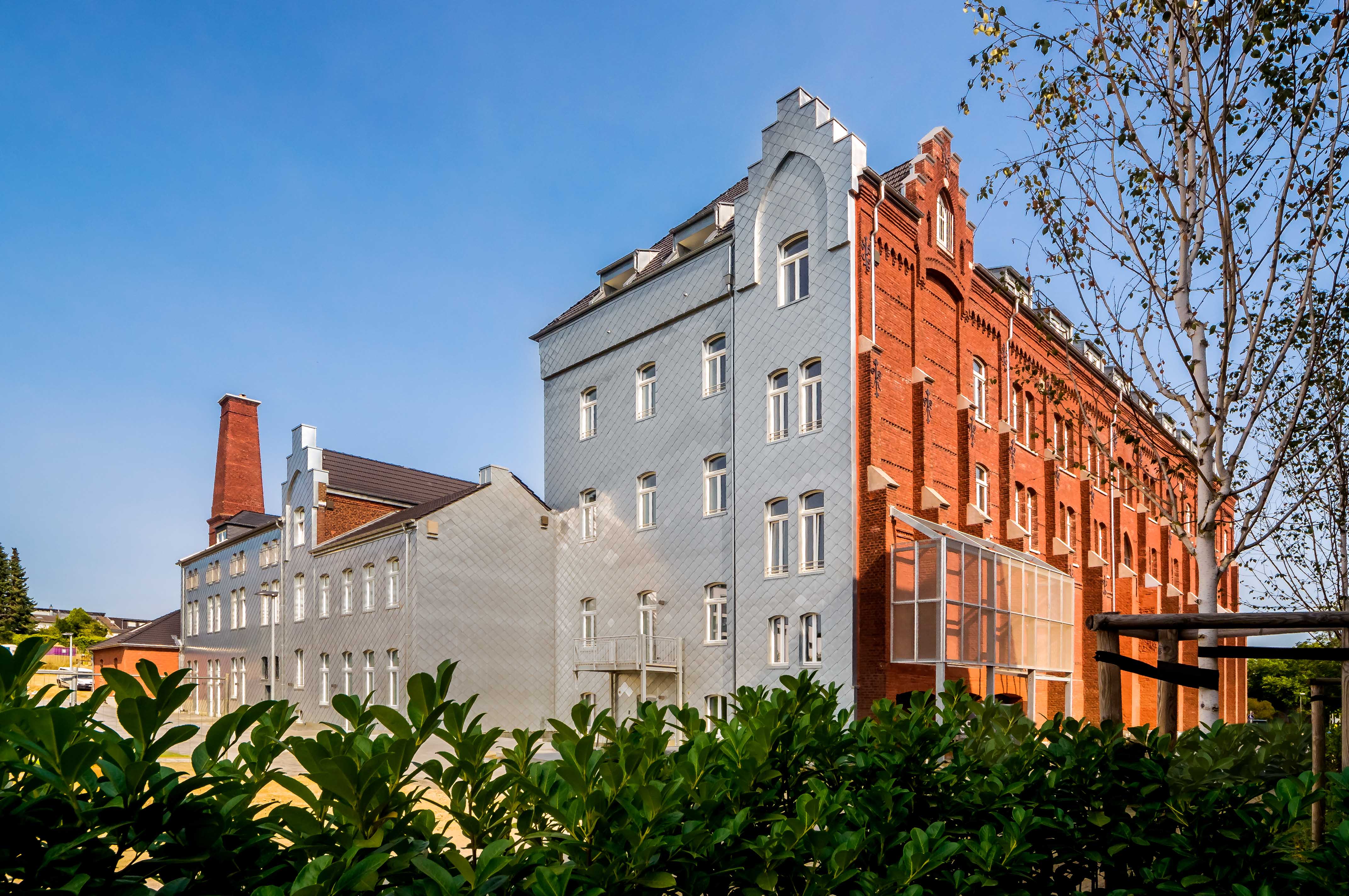
And it is right here that he can Good Shepherd It makes sense to fit into the picture if you're looking for a housing solution that makes starting in Aachen easier overall. The Good Shepherd is a residential project with furnished apartments, which many choose because they want to move in quickly and do not want to organize furniture, the Internet and temporary solutions in addition to looking for accommodation. If you are still learning your mobility routine in Aachen at the same time, such a stable starting point can be a huge relief because you don't have to solve everything at the same time.
conclusion
Aachen parking zones are reliable if you see them as a system: two tariff zones with clear operating times and tariffs, supplemented by individual special regulations, which you can recognize at the vending machine or on the signs. If you use cell phone parking, be sure to select the local rate so that you don't pay unnecessary fees. And if you park in the vicinity of RWTH, take seriously that parking space management applies there, including parking permits, parking zones and consistent monitoring.
If you're new to Aachen, it's also worth thinking about living and parking together. A good housing decision often saves you more nerves in everyday life than the best saving tip. And if you're looking for a solution that allows you to arrive in Aachen quickly and furnished, the Good Shepherd An option that you can easily look at.
Inquire directly
If you want to check whether an apartment is at Good Shepherd If it suits your situation, you can inquire directly and without obligation. This gives you quick clarity about availability and the process.
https://guterhirte-wohnen.com/kontakt